
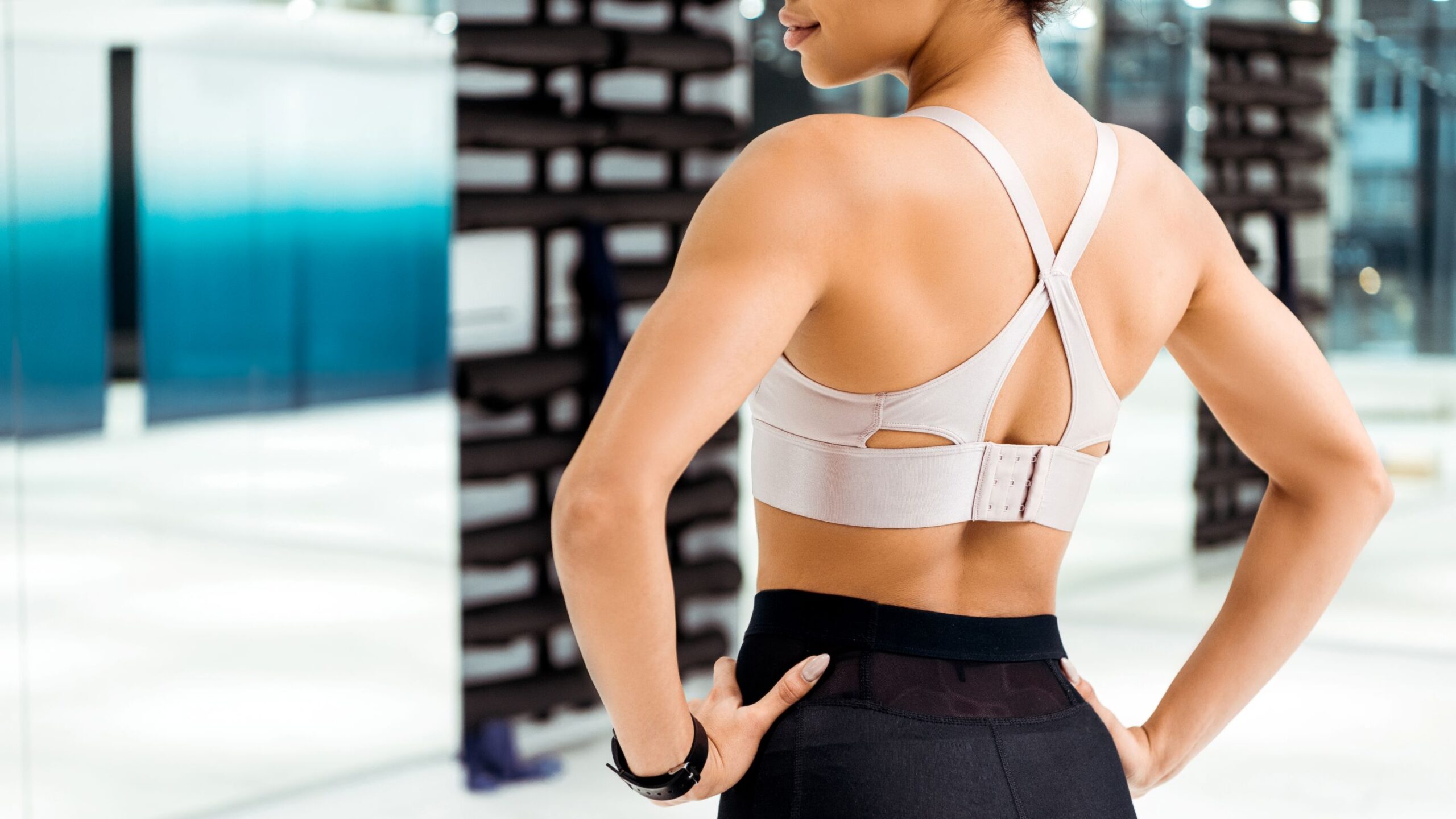
When planning a high-energy gym routine, it is easy to focus on selecting the right training shoes, tracking your progressive overload, or prepping your post-workout protein. However, there is one piece of equipment that directly impacts your physical health, comfort, and biomechanics more than almost any other: your sports bra.
While light-support bralettes have their place for lounging or gentle mobility work, pushing your limits in the gym requires structural integrity. Whether you are attacking a heavy barbell circuit, sprinting on the tread, or powering through box jumps, wearing a dedicated high-impact sports bra is essential.
Here is why upgrading to high-impact support is one of the smartest moves you can make for your body and your workout.
1. Superior Motion Control & Cooper’s Ligament Protection
During high-impact movements—such as running, jumping rope, or performing plyometrics—breast tissue moves in a complex, three-dimensional figure-eight pattern (up-and-down, side-to-side, and in-and-out). Research shows that unsupported breasts can move up to 14 centimeters during intense exercise.
Breasts are composed primarily of soft adipose tissue and are supported structurally by delicate connective tissues known as Cooper’s ligaments.
-
The Danger: Continuous stress from uncontrolled bounce stretches these non-elastic ligaments over time. Once Cooper’s ligaments stretch out, they cannot bounce back, leading to premature sagging and tissue damage.
-
The Solution: High-impact sports bras are explicitly engineered using encapsulation, strong compression, or a hybrid of both to reduce breast displacement by up to 70–80%, preserving long-term structural tissue health.
2. Pain Prevention & Musculoskeletal Alignment
Exercising without adequate bounce control forces your surrounding muscle groups to overcompensate. When your chest moves excessively, your body naturally alters its posture—often rounding the shoulders or pulling the upper back forward—to absorb the impact.
This improper biomechanics frequently leads to:
-
Chronic upper back, neck, and shoulder strain.
-
Altered running stride and diminished force production during lifts.
-
Exercise-induced breast pain (mastalgia), which causes many women to shorten their workouts or stop altogether.
A structured high-impact underband acts as the main anchor for support, relieving strain on the neck muscles and allowing you to maintain proper spinal alignment during heavy squats and dynamic lifts.
3. Maximum Focus & Mental Confidence
Nothing ruins a workout flow faster than physical distraction. If you have to pause mid-set to pull up slipping shoulder straps, adjust a shifting waistband, or pull up low-cut cups, your mental focus breaks.
High-impact sports bras provide what we call the “Confidence Fit.” By locking everything securely in place, you free up mental bandwidth. You can jump, drop into deep burpees, and sprint all-out without a second thought about coverage or support.
4. Advanced Moisture Management & Chafing Reduction
High-impact routines mean high-level sweat. High-impact sports bras are typically constructed with technical, multi-layered synthetic fabrics (such as advanced polyester-spandex blends) engineered to handle maximum moisture output.
-
Breathability: Moisture-wicking technical fabrics pull sweat away from sensitive skin beneath the bust and between the shoulder blades, allowing fast evaporation.
-
Zero Friction: High-impact designs feature flatlock seams, covered elastic bands, and wide, ergonomic straps to eliminate the micro-friction that causes painful chafing during high-rep movements.
Experience Unmatched Support with Koppla Activewear
At Koppla Activewear, we believe performance gear should empower every contour of your body. Our high-impact sports bras are designed with high-recovery, 4-way stretch fabrics, breathable mesh zones, and wide, soft underbands that lock in bounce without restricting your diaphragm.
Elevate your gym routine, protect your body, and hit every new PR with complete confidence.
👉 Explore High-Impact Sports Bras at Koppla Activewear
Frequently Asked Questions (FAQs)
1. What is the difference between a low-impact and a high-impact sports bra?
Low-impact sports bras are designed for slow, gentle movements with minimal bounce (like yoga, walking, or pilates) and usually rely on light single-layer stretch fabrics. High-impact sports bras are engineered for aggressive, high-bounce movements (like running, HIIT, and plyometrics) using stronger compression fabrics, wider underbands, padded or molded cups, and reinforced straps to restrict multidirectional movement.
2. Can wearing a high-impact sports bra for gym workouts prevent sagging?
Yes. High-impact sports bras significantly reduce the vertical and lateral bounce that causes Cooper’s ligaments (the natural connective tissue supporting the breasts) to stretch. Because these ligaments are non-elastic and cannot repair themselves once stretched, wearing proper high-impact support during active workouts preserves natural firmness and tissue structure over time.
3. How tight should a high-impact sports bra feel during a workout routine?
A high-impact sports bra should feel snug and securely anchored, but it should never restrict your breathing or dig painfully into your skin. You should be able to comfortably fit two fingers under the underband and shoulder straps, and take a full, deep breath without feeling localized chest pressure.
4. Should I wear a high-impact sports bra for strength training and weightlifting?
Yes, especially if your weightlifting routine includes compound movements like cleans, snatches, box jumps, or kettlebell swings. Even during traditional lifting, proper chest support helps stabilize your upper back posture and prevents shoulder strain, allowing for cleaner form and better force production.
5. How long does a high-impact sports bra maintain its support?
On average, a high-impact sports bra retains its optimal compression and bounce control for 6 to 12 months, or roughly 100 wash cycles. Over time, sweat, body oils, and stretching degrade the elastane fibers in the underband and straps. Once the band begins to ride up or pull away easily, it’s time to replace it.


